
TABLETOP SHAPES & EDGE PROFILES
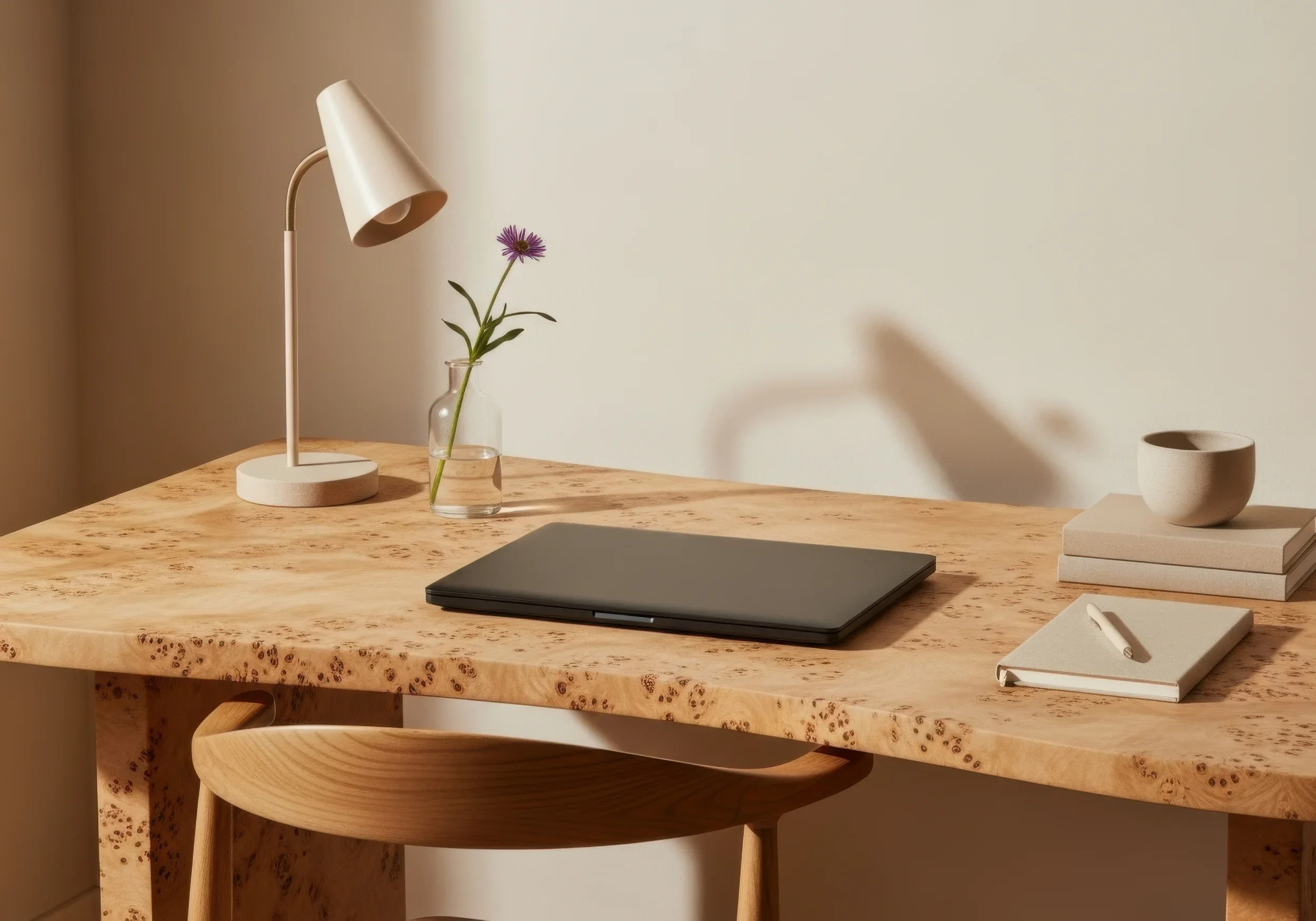
The Atlas Project
A bold reimagining of a timeless brand.
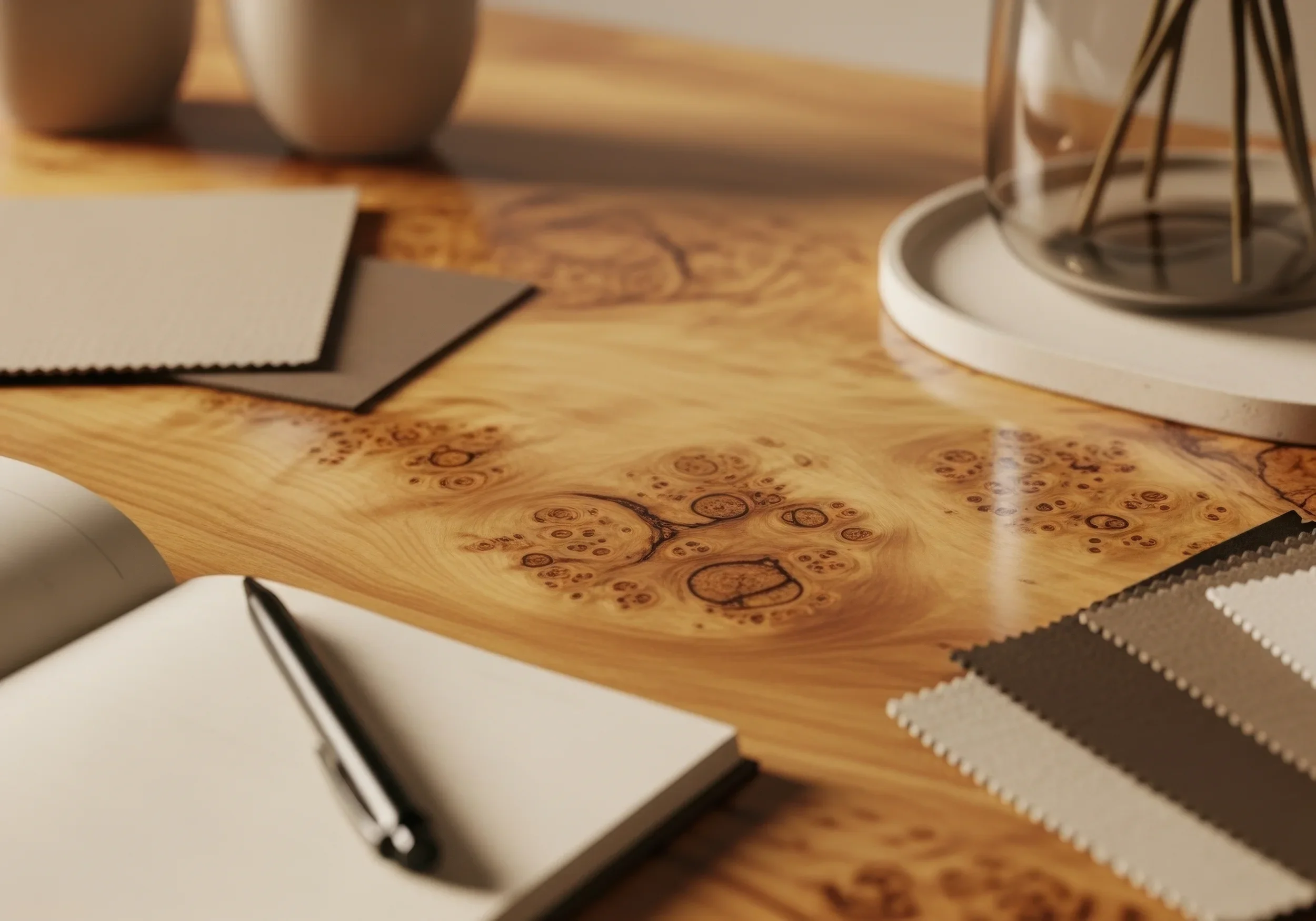
The Echo Project
A bold reimagining of a timeless brand.
What tabletop shape is right for your needs? When choosing what fits, consider how you can best maximize the space in the room.
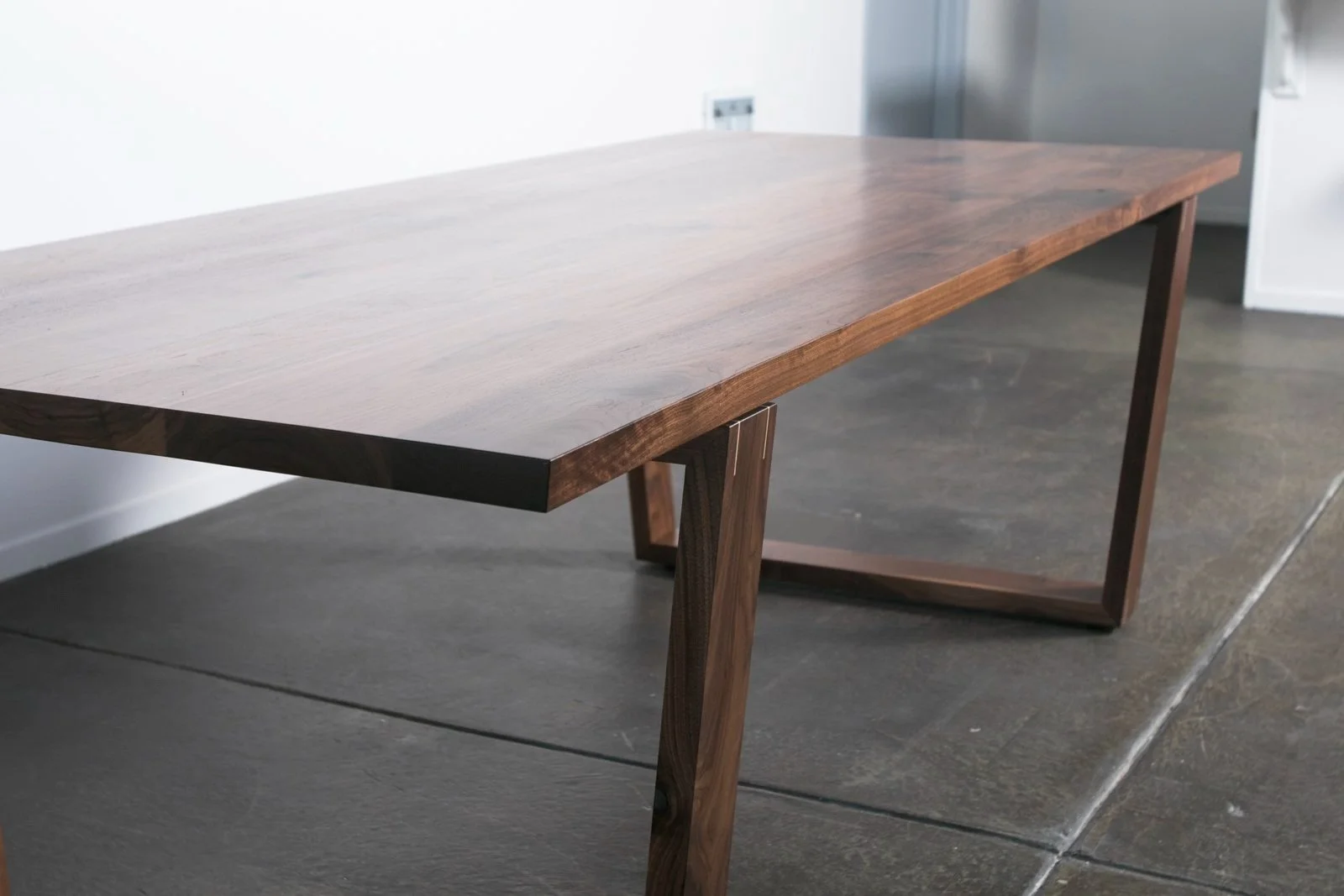
RECTANGULAR & SQUARE | VERTICAL OR BEVELED EDGE
Rectangular tables are the most commonly used shape with regard to practicality, functionality and comfort. They accommodate elongated dining rooms and allow for more seating in less space.
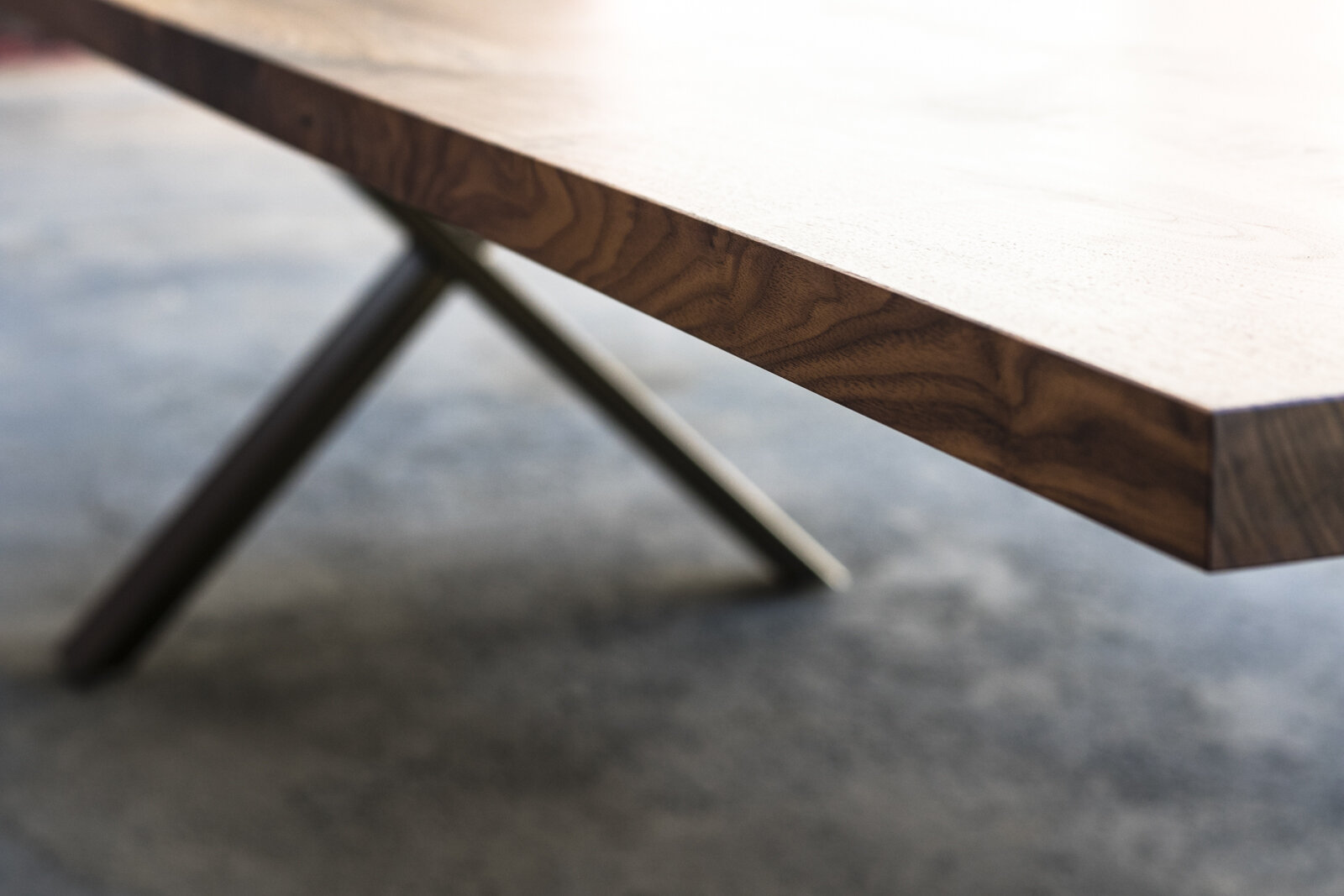
Standard straight/vertical edge
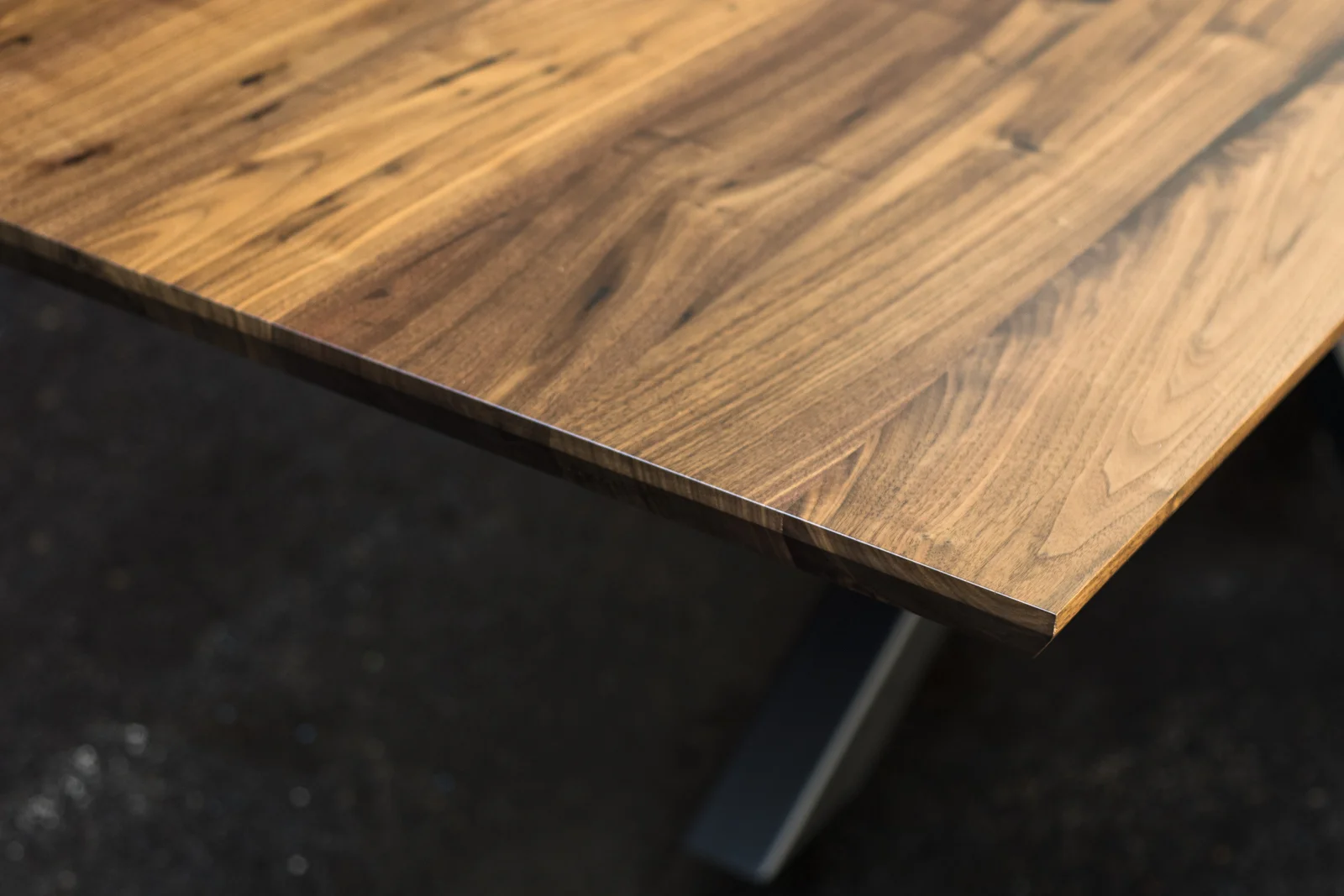
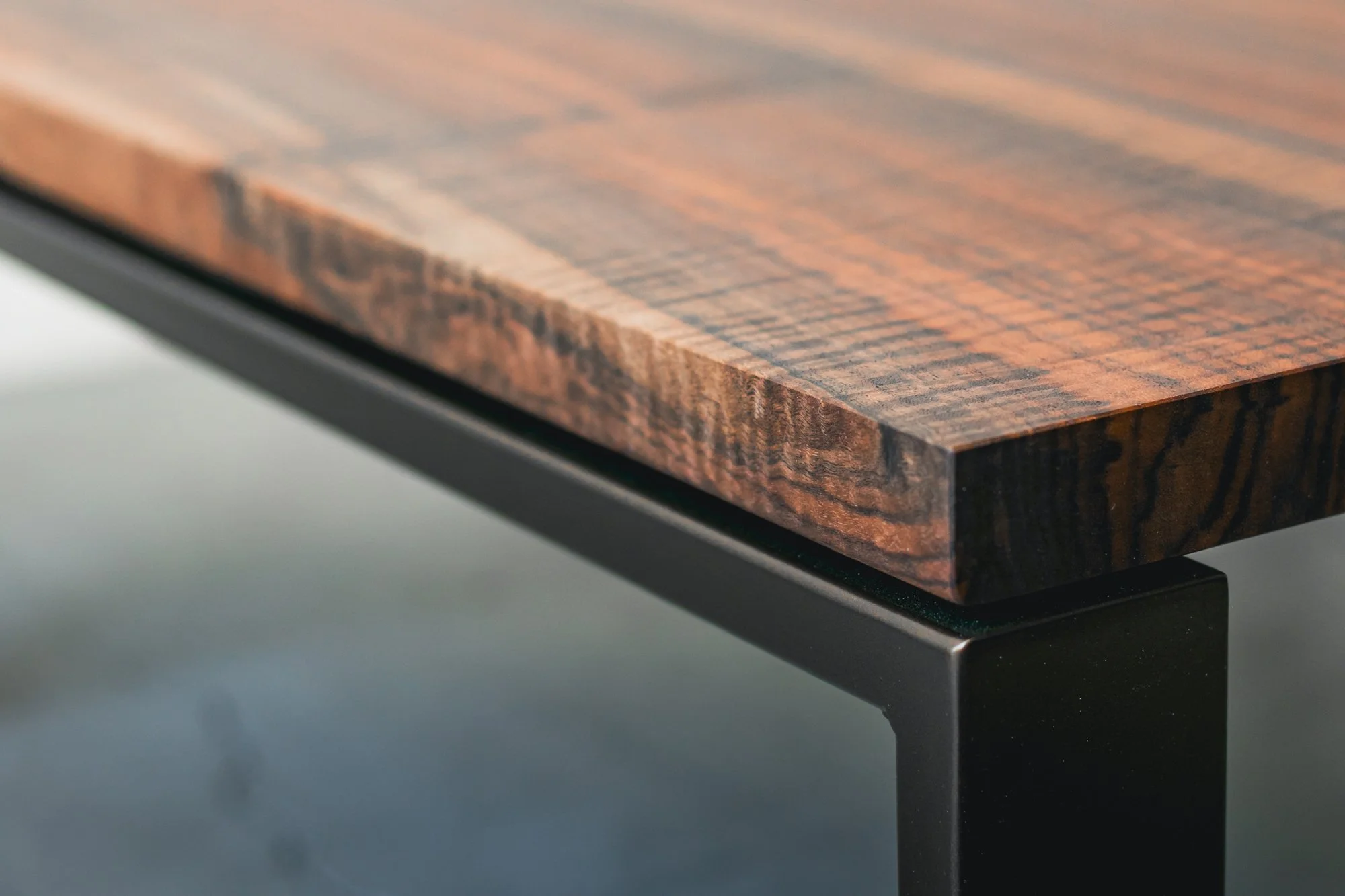
Beveled edge
FULL ROUNDOVER (BULLNOSE)
A great way to soften an otherwise rigid rectangular dining table or desk. It not only adds an eye-catching focal point, but also comfort for a person’s forearms when dining or working.
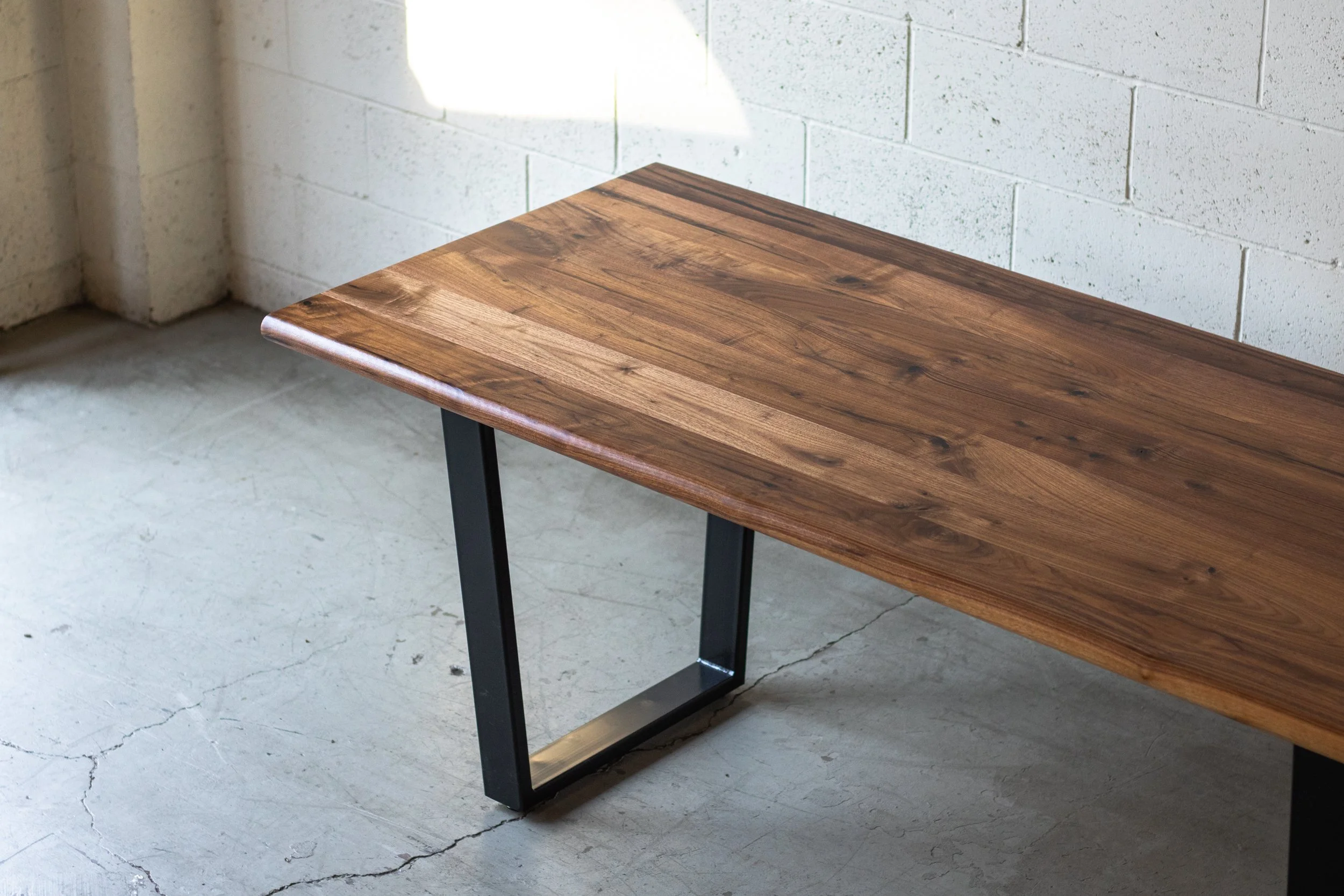
CURVED RECTANGULAR
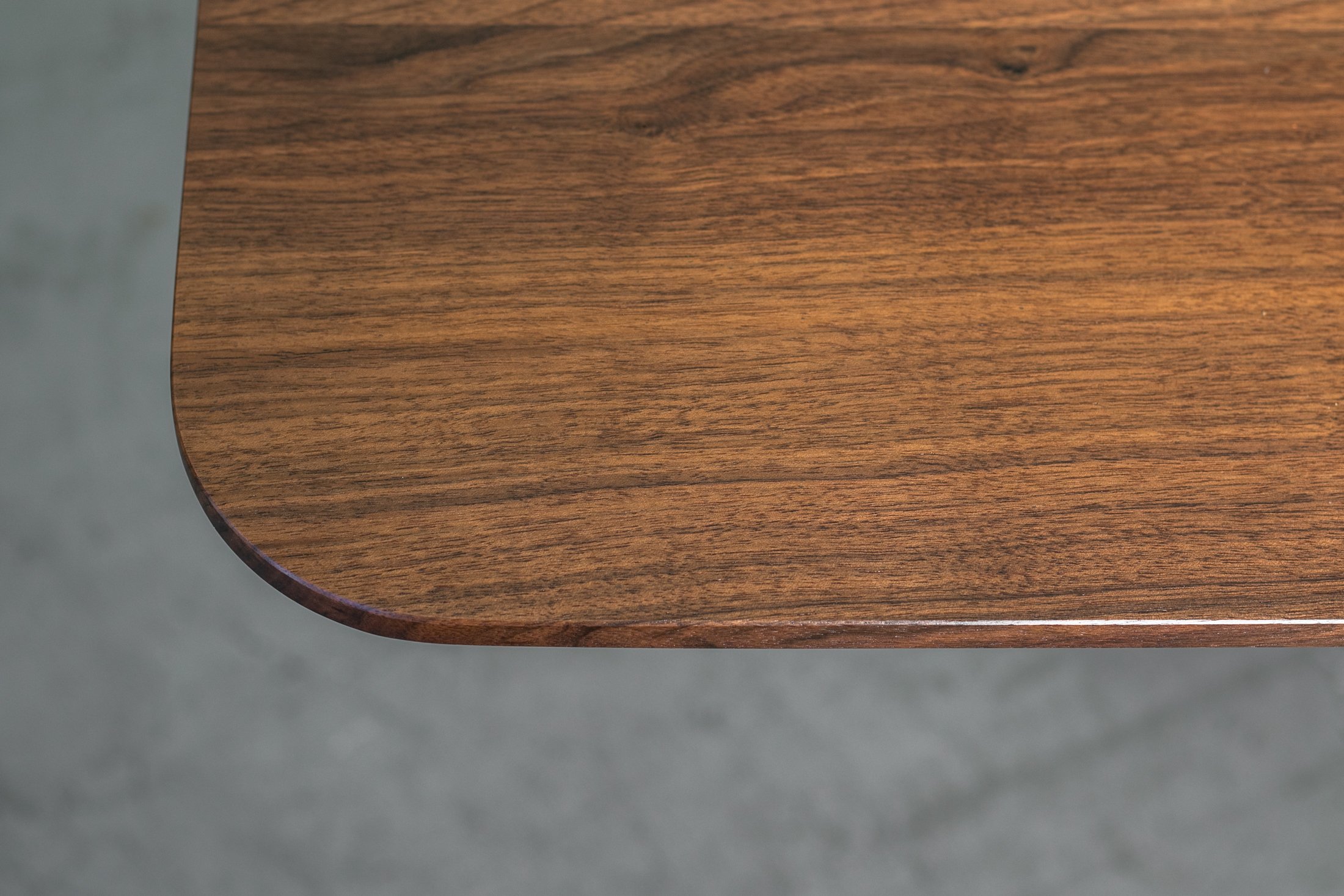
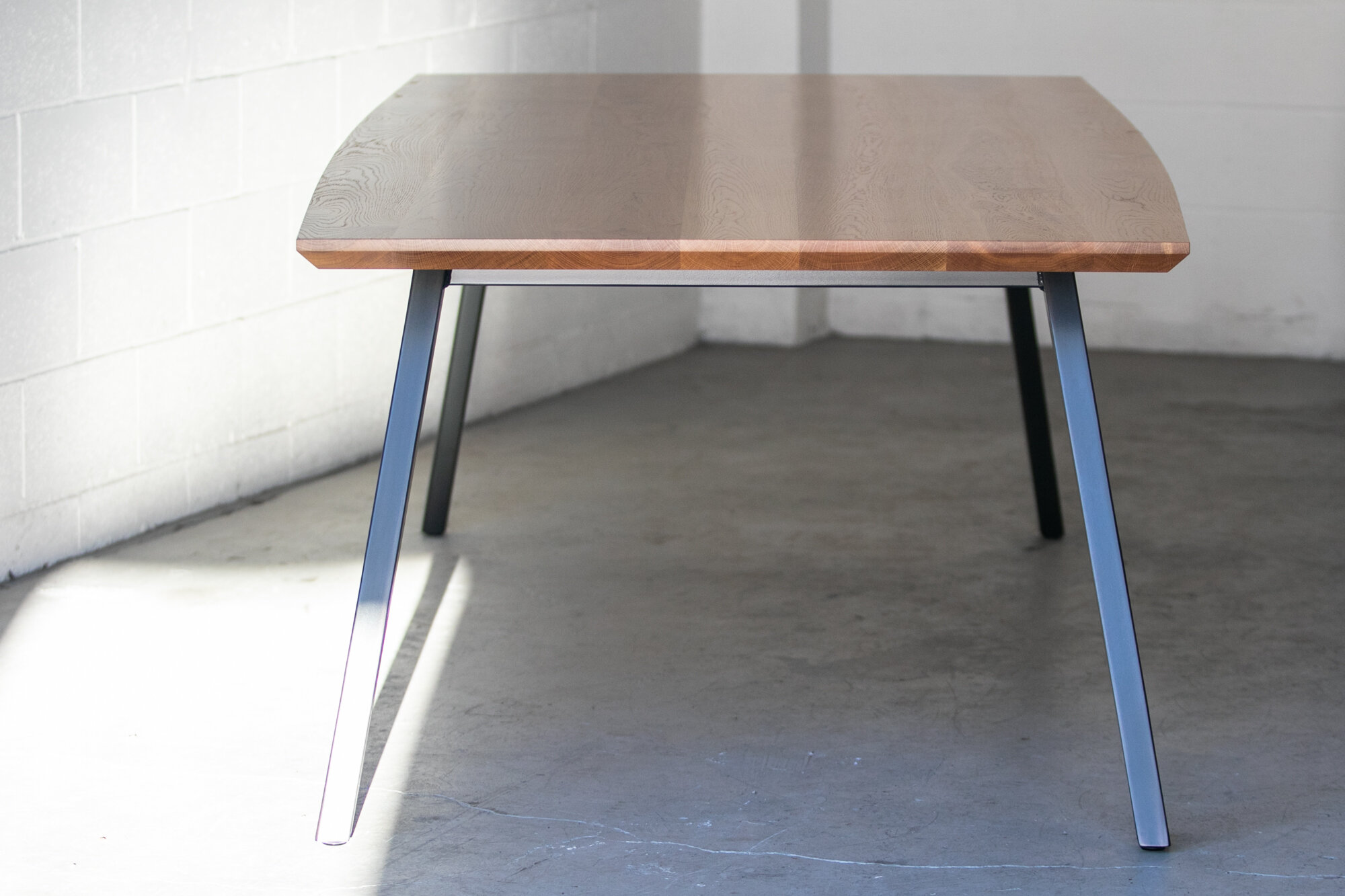
Prefer curves to hard angles? A curved long edge on a rectangular tabletop acquires the allure of a round dining table, softening the design and injecting a sense of flow into the space. Add curved ends and rounded corners to further soften the rigidity of a rectangular tabletop, or a beveled edge for more dimension (<<<< pictured left with a beveled edge).
ROUNDED RADIUS CORNER
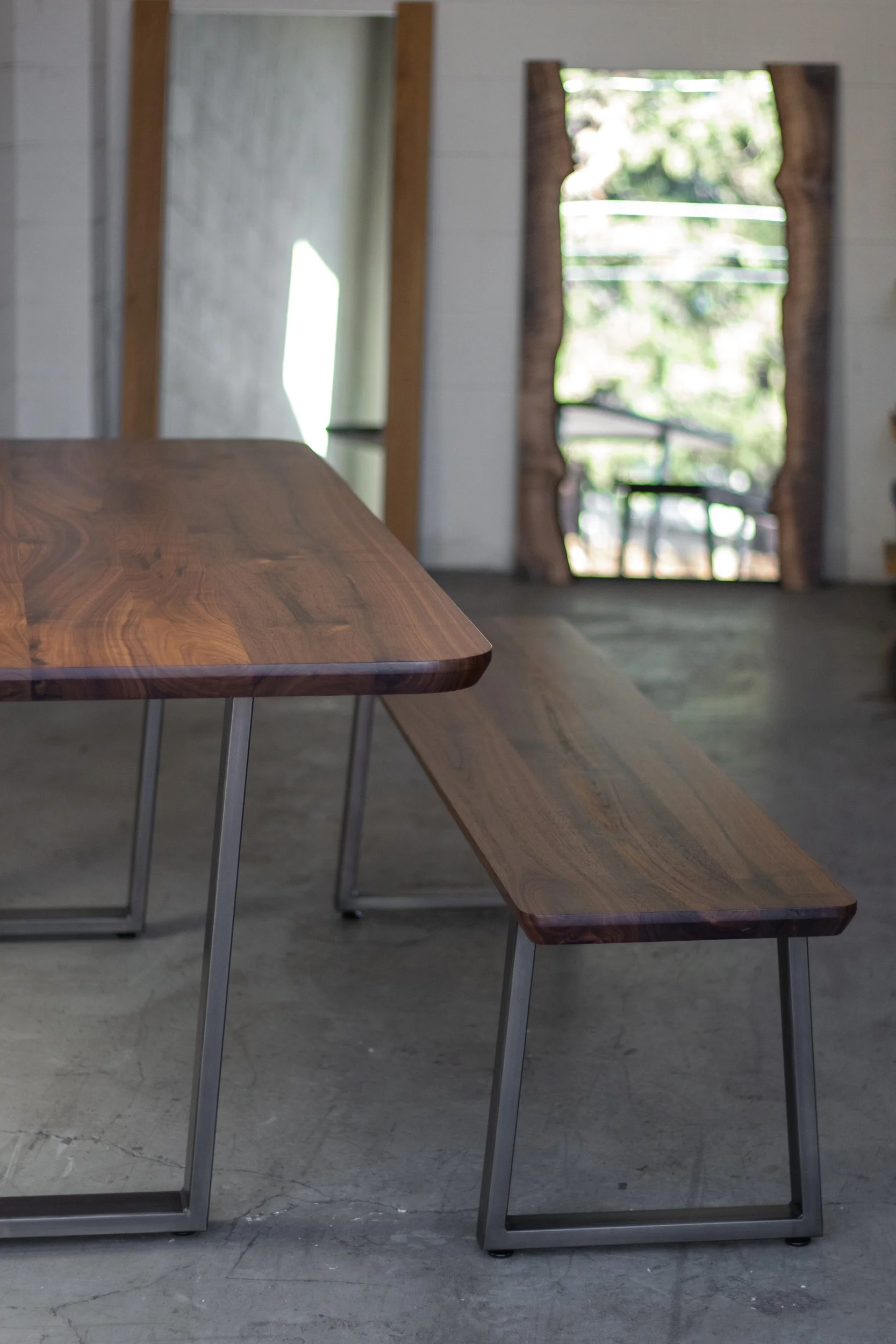
A mild rounded corner can be especially accommodating for banquette seating with a number of different edge profiles available (pictured right with a beveled edge >>>>).

CIRCULAR
A circular tabletop can be advantageous with respect to comfort, as most often round tabletops are paired with unobstructed pedestal-style bases in which guests do not need to share leg room when seated at the table. Round tables also promote sociability and a sense of togetherness during mealtimes and special occasions.
Round tables occupy particular settings best in which other components in the room to revolve around it. A round table is often placed in the center of a designated area rather than parallel to a wall or a corner like a square or rectangular table would.
Perfect for: smaller dining areas, breakfast tables
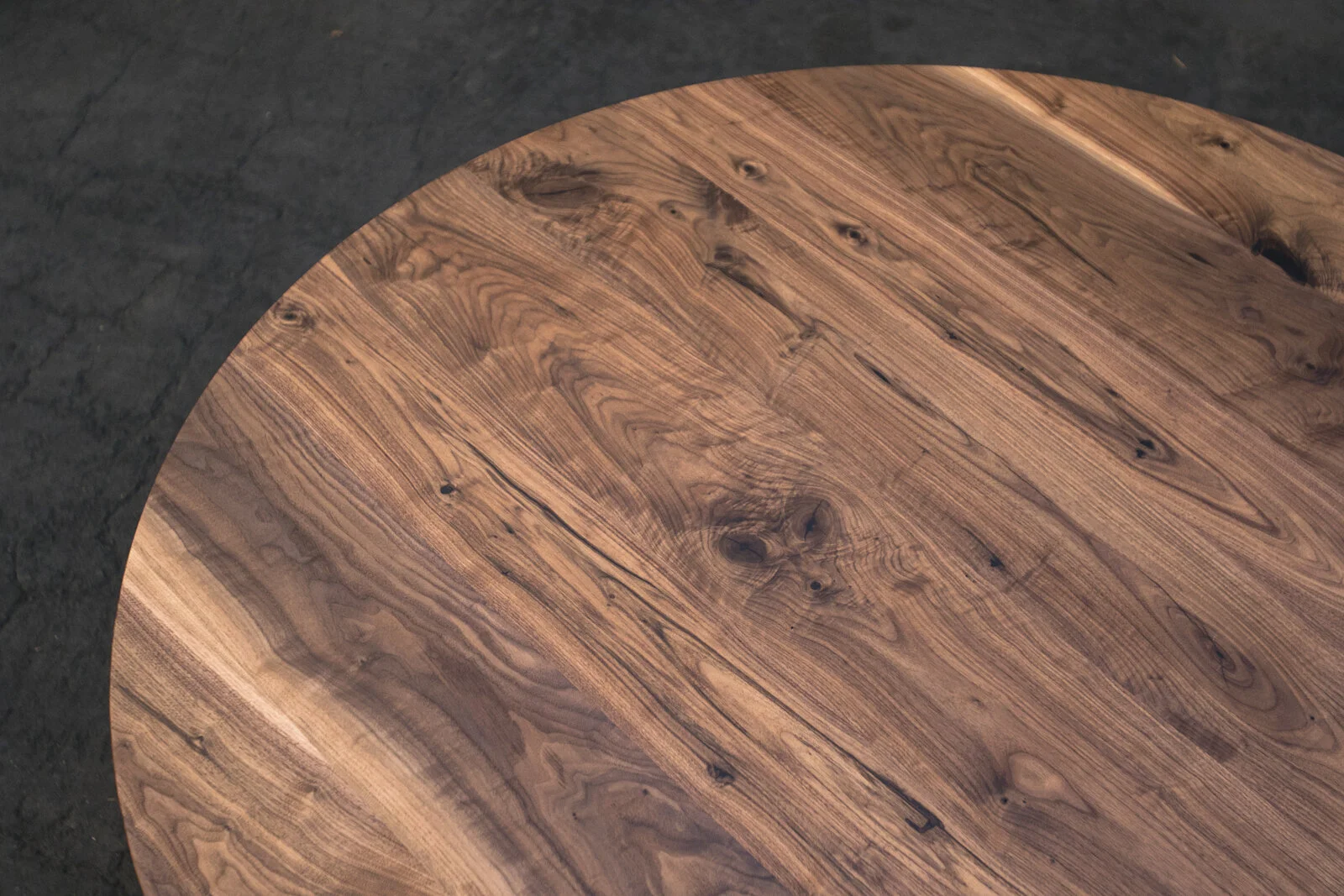
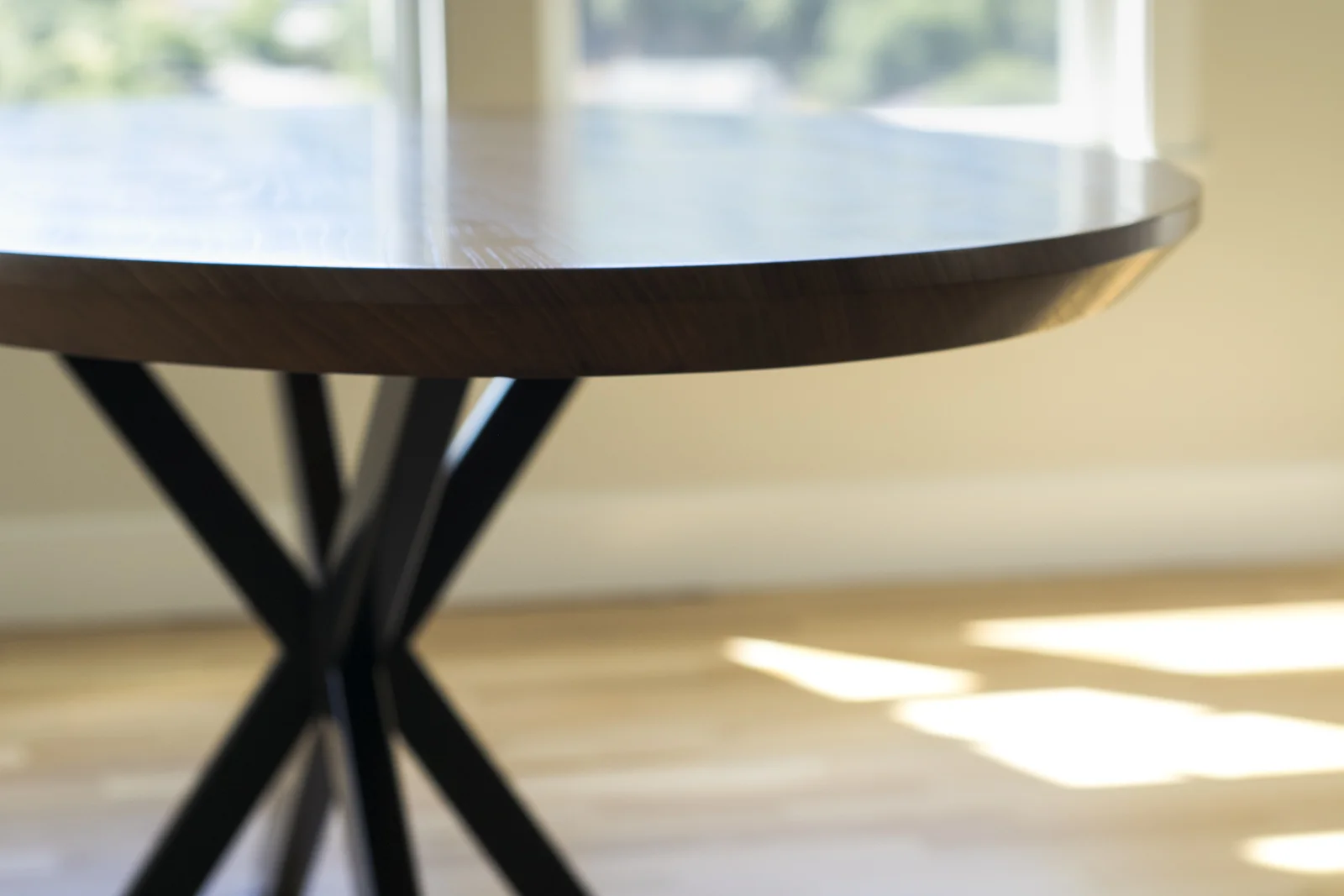
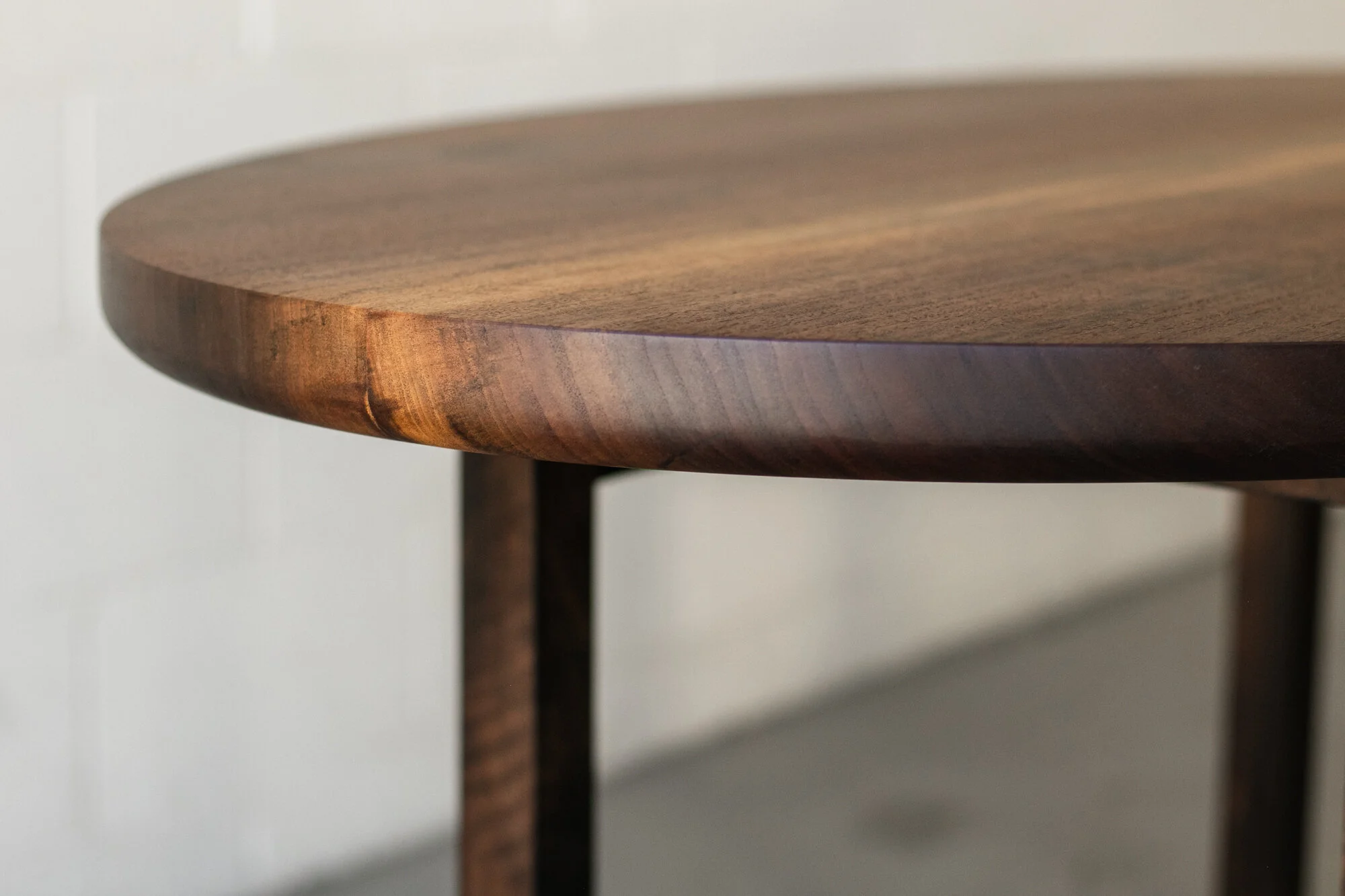
Various edge profiles can be implemented on round tabletops such as a half-rounded edge (pictured), a beveled edge (pictured), a full-rounded edge, or a standard/vertical edge.
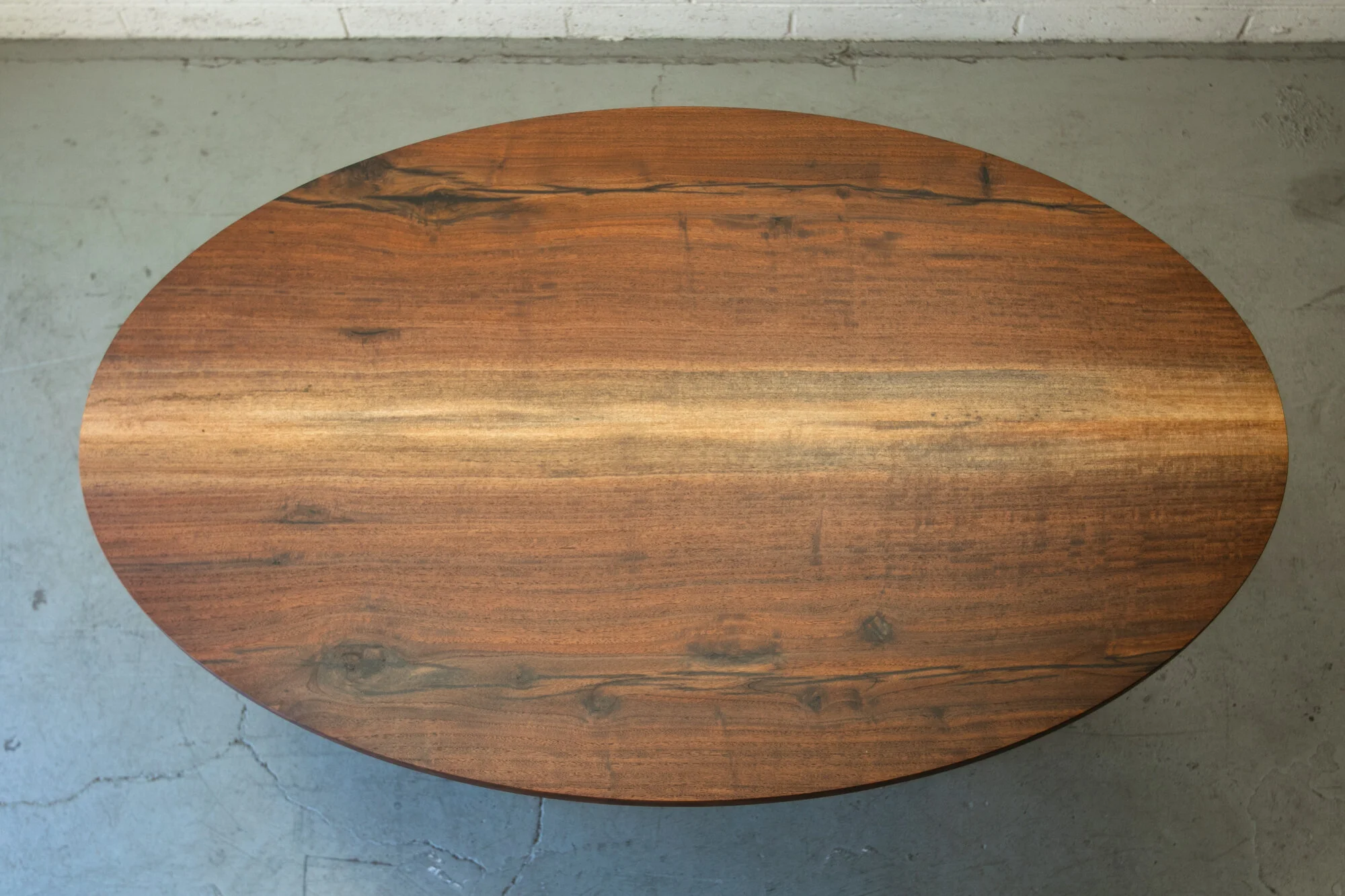
OVAL & ELLIPSE
An oval or ellipse shape pairs exceptionally with any of our pedestal-style bases, and the unique shape allows for superior versatility.
The functionality of an oval or ellipse-shaped dining table combines the linear simplicity of a rectangular top with the intimacy and comfort of a round one, occupying less space. The curved edges can also be more suitable for small spaces allowing more space to move around the table.
SHAPEZ by MEZ — IRREGULAR, ASYMMETRICAL, OR AMORPHIC SHAPES
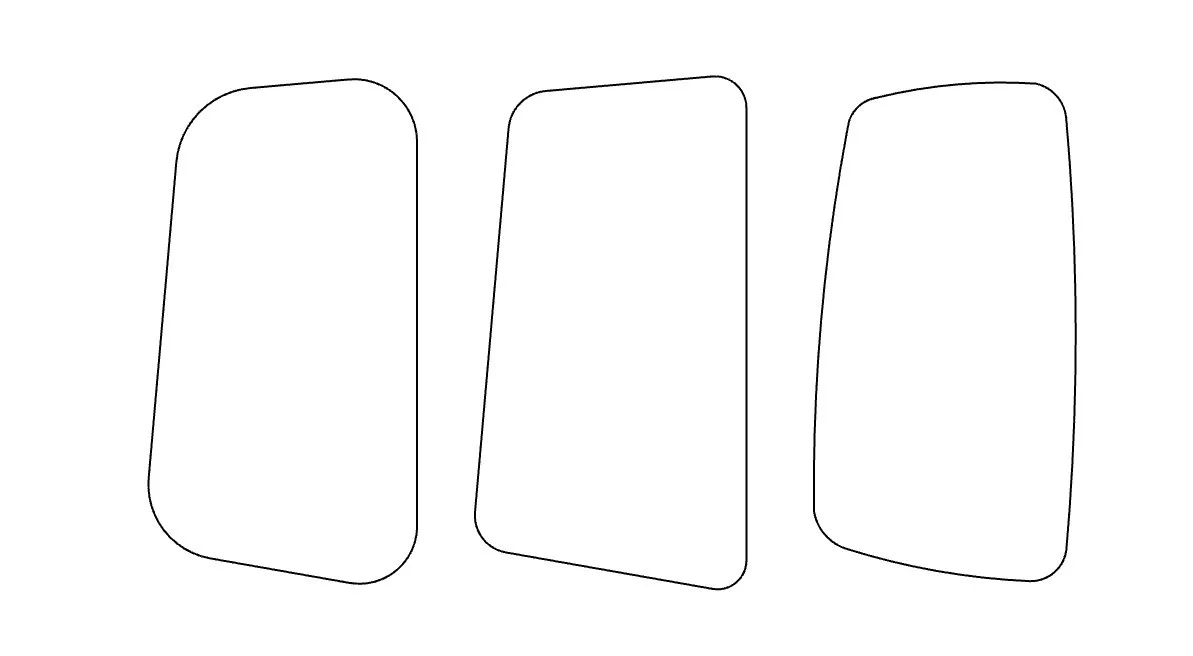
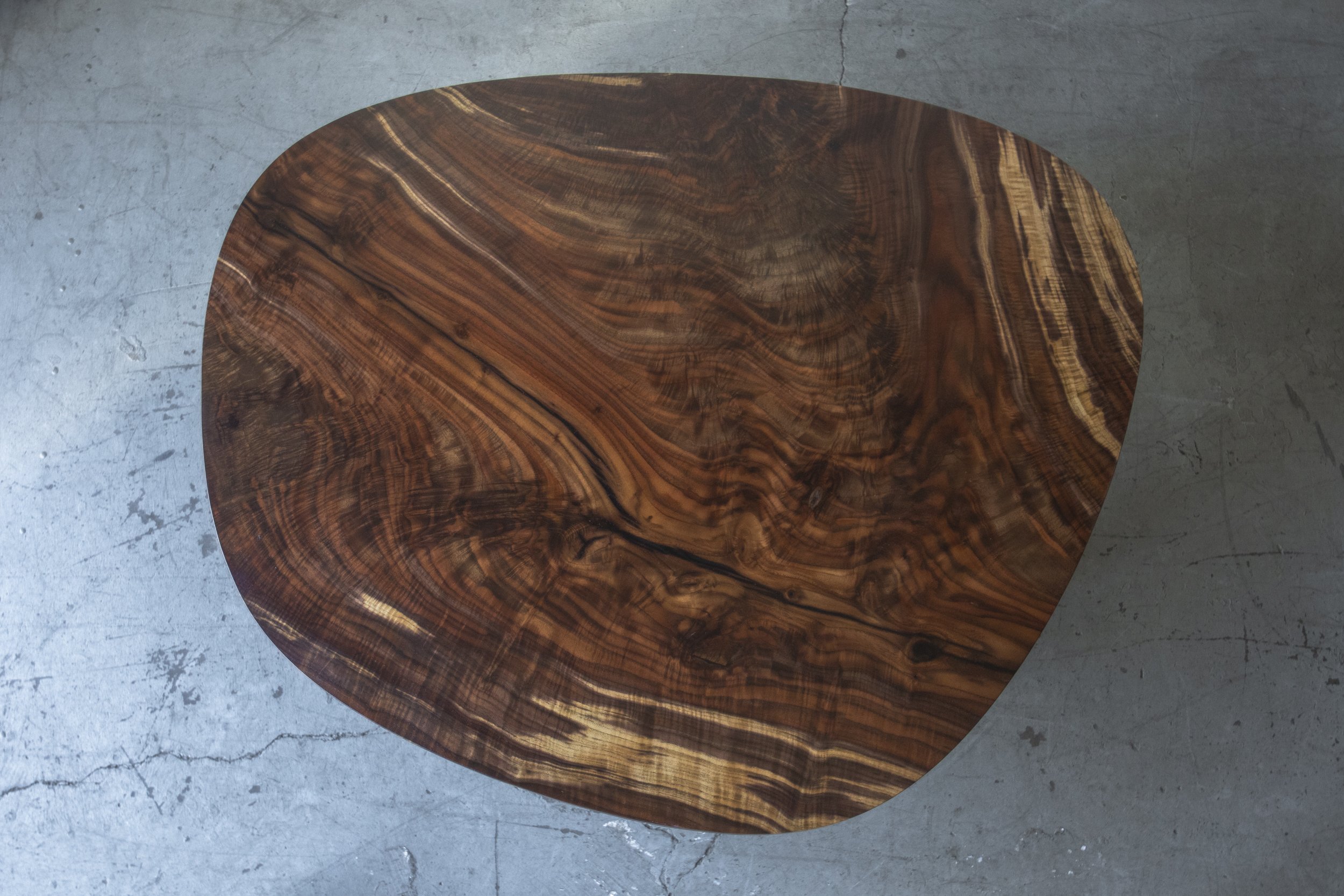
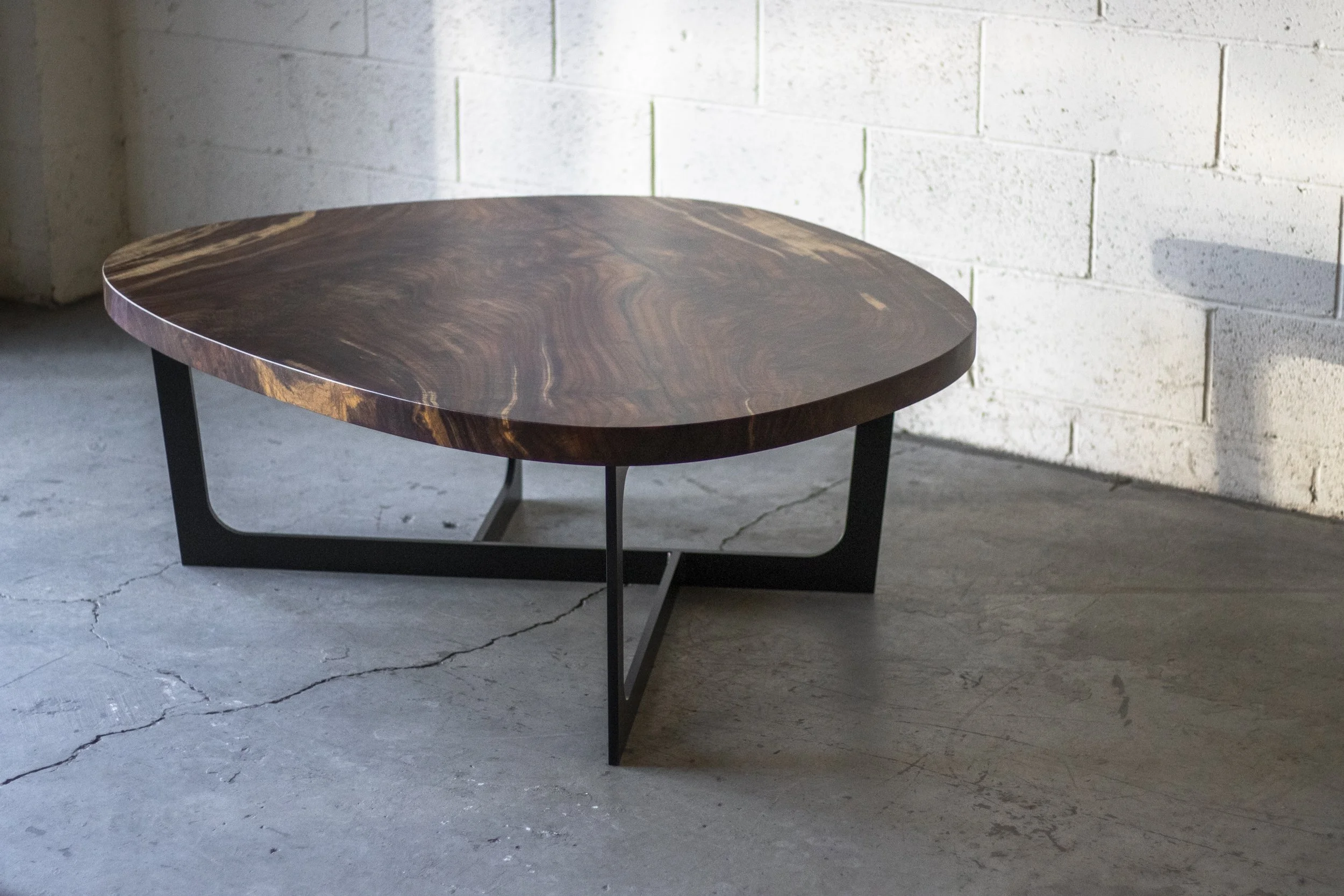
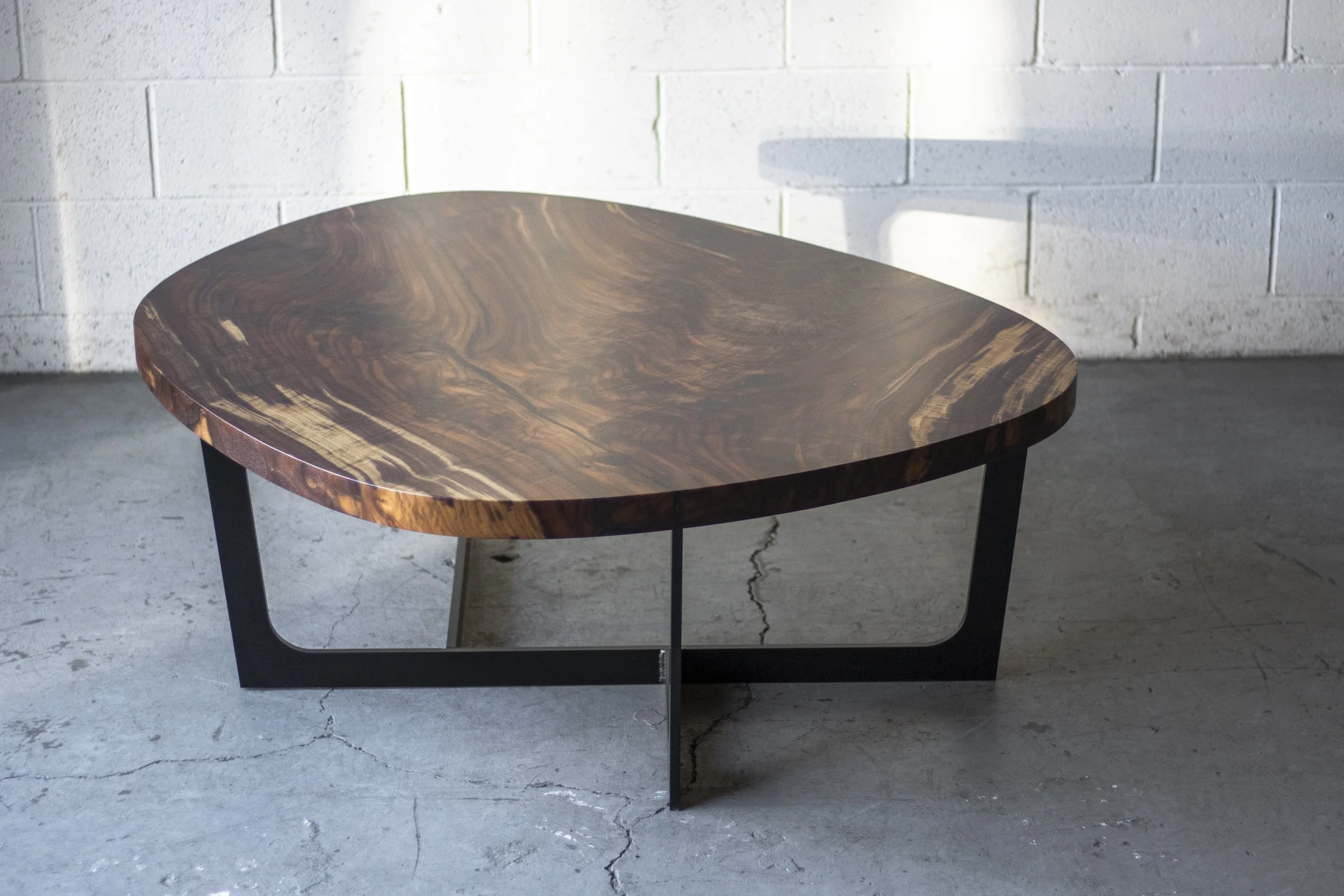
Let’s get weird! We recently started playing around with irregular tabletop shapes that have a unique eye-catching presence. An amorphIc shape is described as having no defined shape, or lacking form. The example below shows a coffee table shape created with the intent to look completely different from one vantage point to another.
LIVE EDGE
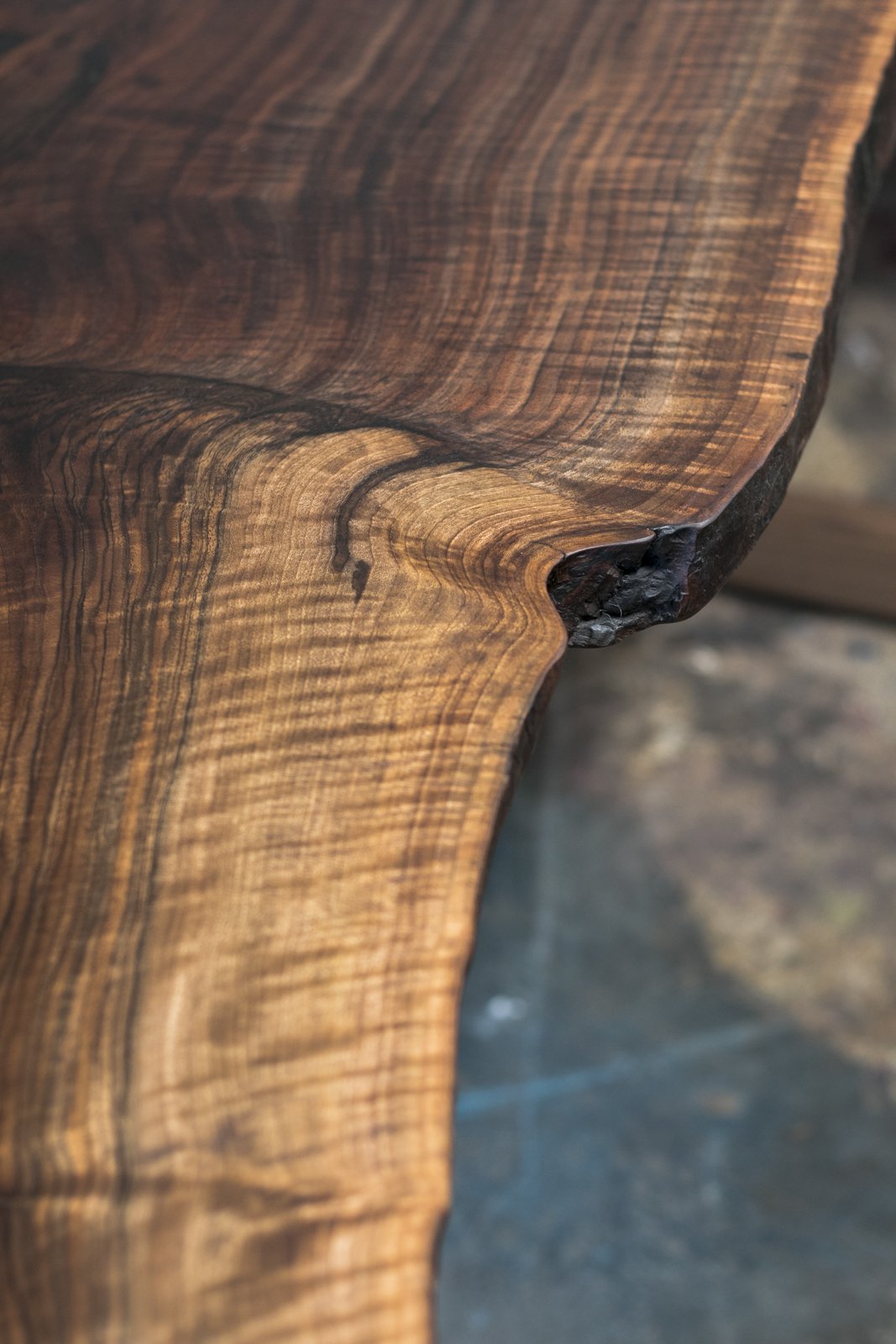
A natural “live” edge can be maintained on a salvaged slab table with any number of approaches on how to preserve it’s natural character. Please visit our ‘Slab Processing’ page to learn more about having a live edge slab transform into a furniture item.
Please note, there are considerable differences in price between a salvaged slab and our other dimensional wood options. Slabs are often 5-7x the price of dimensional lumber and this reflected in our pricing. You can get a sense of general pricing in the following link:
INVERTED LIVE EDGE + GLASS INLAY
Cutting a slab at the center and inverting the two halves makes for a very interesting twist on a live edge table, adding a recessed tempered “smoked” glass channel to the center allowing the character of the edge to be seen while the functionality of a rectangular table can be enjoyed. Various species of wood species can be sourced (prices varying) and the design can be paired with a variety of different bases.
